
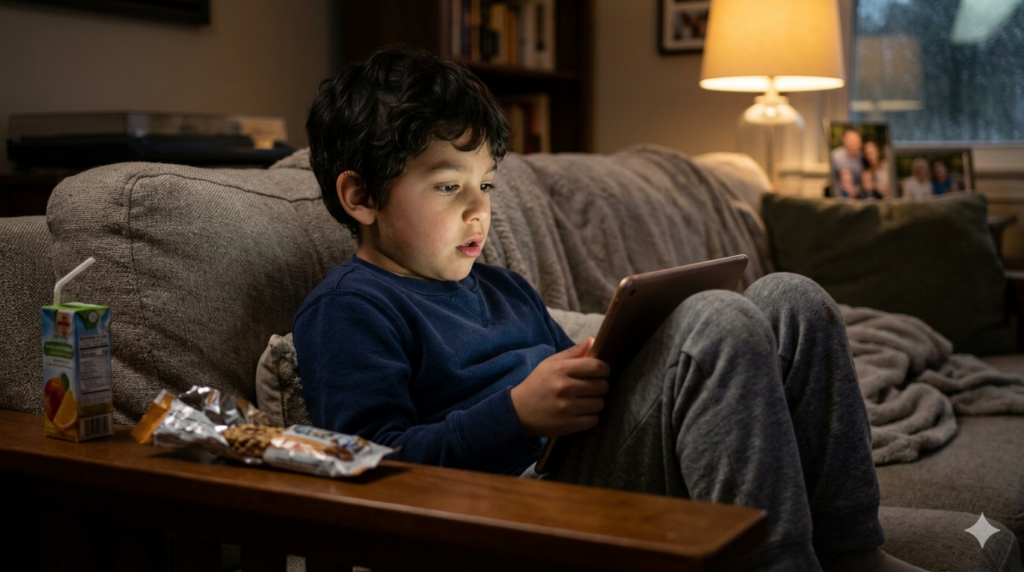
Parents today spend considerable energy managing screen time — worrying about sleep, attention, and social development. Oral health rarely enters that conversation. But research is beginning to draw a clear line between the habits children develop around screens and the condition of their teeth.
At OSO Pediatric Dentistry in Oxnard, Dr. Elena Bedilo sees the evidence of these patterns regularly. Understanding how screen time behaviors affect oral health is the first step toward breaking the cycle — without eliminating technology altogether.
What the Research Actually Shows
Excessive screen time is associated with dietary patterns, hygiene habits, and physical posture that each independently raise the risk of dental problems.
A cross-sectional study published in Cureus in 2025, involving 353 children aged 6 to 13 years, found a statistically significant correlation between cavitated carious lesions and screen-related eating habits. On weekends, nearly 78 percent of children exceeded two hours of daily screen time, and only 17 percent reported brushing twice daily. nih
A separate study published in Frontiers in Oral Health found that increased screen time is associated with unhealthy dietary patterns, including higher intake of cariogenic foods such as energy-dense snacks and sugar-sweetened beverages, which contribute directly to dental caries. Frontiers
This is not about blaming devices. It is about understanding the specific behaviors they encourage — and making targeted adjustments.
Mindless Snacking During Screen Use
Children consume more sugary and starchy foods when distracted by screens, giving cavity-causing bacteria more opportunities to attack enamel.
When a child is absorbed in a video or a game, awareness of what and how much they are eating drops significantly. Sticky snacks, crackers, and sweet drinks consumed continuously throughout a screen session create repeated acid attacks on tooth enamel — each one lasting approximately 20 minutes.
Saliva helps neutralize acid and rinse food particles away. But when snacking is frequent and continuous, saliva cannot recover between exposures. Over time, this pattern weakens enamel and dramatically increases cavity risk.
Mouth Breathing and Its Effect on Oral Health
Relaxed posture during screen use frequently leads to mouth breathing, which reduces saliva and increases susceptibility to decay.
Mouth breathing dries out the mouth by reducing saliva flow. Saliva plays a critical role in oral health by washing away food particles, neutralizing harmful acids, and controlling bacteria. When the mouth is dry due to mouth breathing, the risk of cavities and gum disease increases — even when a child maintains otherwise good oral hygiene. Altered breathing and jaw position during development can also affect how the jaw joints develop, potentially leading to bite problems in the future. Cooper Orthodontics
Many parents notice their child’s mouth falling open during screen sessions. This is particularly common when children recline on a couch or lean forward toward a device. Encouraging upright posture and nasal breathing during screen use is a simple habit that carries meaningful dental benefits.
Skipped and Rushed Bedtime Routines
Late-night screen use contributes directly to skipped or inadequate brushing — a pattern that compounds over time.
Children may become distracted or tired after extended device use, making them more likely to rush through oral hygiene routines. Creating a device-free bedtime routine often makes oral care easier to manage. Childrensdentistryofabilene
For younger children especially, brushing is a supervised activity that requires adult consistency. When bedtime routines collapse around screen use, brushing is often the first step to disappear. Over weeks and months, the accumulation of missed cleanings creates exactly the conditions in which decay develops.
Screen Time, Stress, and Teeth Grinding
Intense focus or stimulation during gaming and video content can contribute to jaw tension and nighttime bruxism.
Prolonged screen time, particularly during intense gaming or focused digital engagement, can contribute to bruxism — teeth grinding. Bruxism leads to excessive wear on the enamel, jaw pain, headaches, and in some cases temporomandibular joint disorders. Mywindermerepediatricdentistry
Children who grind their teeth at night may wake with jaw soreness or headaches. Parents often notice worn-down tooth surfaces at a routine cleaning. Early detection allows for intervention before significant structural damage occurs.
What Dental Neglect Looks Like in the Research
A multivariable analysis published in the Journal of Paediatrics and Child Health found that dental neglect was statistically significantly associated with unsupervised and infrequent tooth brushing, frequent snacking, reduced physical activity, and screen exposure at an early age. PubMed
These findings matter because dental neglect is not always intentional. It is often the quiet byproduct of busy family routines where screens fill gaps — and oral hygiene gets displaced.
How OSO Pediatric Dentistry Can Help
For children already showing signs of screen-related oral health habits — frequent cavities, enamel wear, dry mouth, or grinding — OSO Pediatric Dentistry offers a range of preventive and restorative options tailored to each child’s needs.
Routine dental cleanings every six months allow Dr. Bedilo to track changes before they become serious. Dental sealants protect vulnerable back teeth from the kind of decay that develops in enamel weakened by repeated acid exposure. Silver Diamine Fluoride can stop early active decay non-invasively. And for children who grind, early evaluation helps determine whether a protective approach is warranted.
The goal is not perfection — it is informed prevention.
Practical Adjustments That Make a Real Difference
Families do not need to eliminate screens to protect their children’s teeth. A few consistent habits significantly reduce risk:
- Keep snacks during screen time to water only, and schedule food at set mealtimes away from devices.
- Encourage upright sitting posture and remind children to breathe through their nose.
- Establish a device-free window of at least 30 minutes before brushing and bedtime.
- Supervise brushing for children under 8, regardless of screen routine.
- Schedule dental cleanings every six months so that any developing patterns are caught early.
Your Child’s Smile in the Digital Age
Modern childhood includes screens, and that is not going to change. What can change is the awareness parents bring to the habits that form around them. Oral health is one of the areas most quietly affected — and most easily protected with the right approach.
OSO Pediatric Dentistry is here to help your family build those habits and catch any concerns before they become bigger problems.
📍 1350 West Gonzales Road, First Floor, Oxnard, CA 93036
📞 (805) 204-2910
📧 frontdesk@osopediatricdentistry.com
Schedule your child’s next cleaning and exam at osopediatricdentistry.com. We proudly serve families throughout Oxnard and Ventura County and welcome patients with Medi-Cal Dental.
Frequently Asked Questions
Question: Does screen time directly cause cavities?
Answer: Screen time itself does not cause cavities, but the habits it encourages — frequent snacking, mouth breathing, skipped brushing, and jaw tension — each independently increase cavity risk.
Question: How does mouth breathing during screen use affect teeth?
Answer: Mouth breathing reduces saliva, which is the mouth’s natural defense against acid and bacteria. Without adequate saliva, decay risk increases even when brushing habits are otherwise consistent.
Question: What foods should children avoid during screen time?
Answer: Sugary drinks, crackers, dried fruit, and sticky snacks are particularly harmful during screen sessions because they are consumed slowly and continuously. Water is the safest option during screen use.
Question: Can screens cause teeth grinding in children?
Answer: Research suggests that intense digital engagement — particularly gaming — can contribute to jaw tension and nighttime bruxism. If your child wakes with jaw soreness or headaches, a dental evaluation is recommended.
Question: How often should screen-using children see a dentist?
Answer: Every six months, consistent with AAPD guidelines. Children with existing patterns of decay, dry mouth, or enamel wear may benefit from more frequent monitoring.