Key takeaways:
- Fluoride is endorsed by the AAP, ADA, and AAPD as safe and effective for cavity prevention when used in age-appropriate amounts
- The correct amount of toothpaste — not fluoride itself — is the key safety variable for young children
- Claims linking fluoride to cognitive harm at recommended doses are not supported by current evidence from major health authorities
- Decisions about fluoride should be individualized based on each child’s cavity risk and fluoride exposure from all sources
Few topics in pediatric oral health generate more confusion — or more anxiety — among parents than fluoride. Online discussions range from confident dismissal to serious alarm, often presenting claims that conflict directly with the positions of every major health authority in the United States. The result is that many parents are unsure what to believe, and some are making decisions based on incomplete information.
At OSO Pediatric Dentistry in Oxnard, Dr. Elena Bedilo approaches fluoride the way she approaches every clinical topic: by following the evidence as it actually exists, not as it circulates on social media. This article presents what official bodies say, what the science supports, and what parents genuinely need to know to make informed decisions for their child.
What fluoride does and why it matters
Fluoride is a naturally occurring mineral that strengthens tooth enamel and makes it more resistant to the acid attacks that cause decay.
Fluoride works in two ways. When incorporated into developing enamel during tooth formation, it creates a more acid-resistant mineral structure. Applied topically — through toothpaste or professional treatments — it promotes remineralization of enamel that has been partially weakened by acid exposure, helping to reverse early decay before it progresses.
The AAP continues to recommend that children use age-appropriate amounts of fluoride toothpaste and drink optimally fluoridated water to protect their teeth, with decades of research supporting the safety and effectiveness of fluoride to prevent caries. nih
Dental caries remains one of the most common chronic conditions in childhood. Studies show that community water fluoridation alone prevents at least 25 percent of tooth decay in children and adults throughout their lifespan. Toothpaste adds a direct topical benefit on top of that foundation. nih
What the major health authorities actually recommend
The AAP, ADA, and AAPD are in agreement on fluoride toothpaste — with specific, age-based guidance on amount.
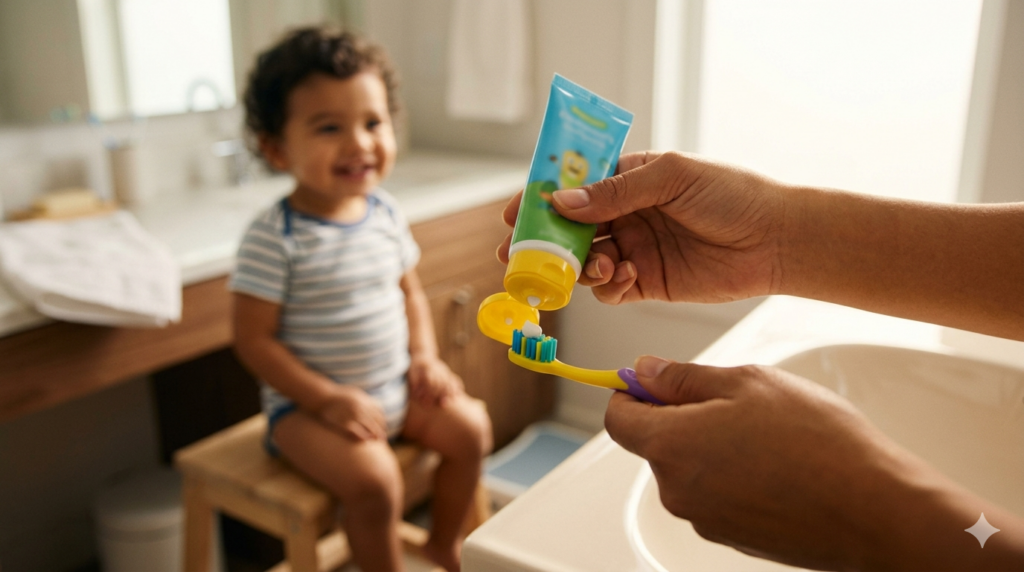
The ADA recommends starting fluoride toothpaste when the first tooth appears, at around six months of age. For children under three years, a smear or rice-sized amount of fluoride toothpaste is recommended. For children aged three and older, a pea-sized amount is appropriate.
The AAPD’s best practice guidelines on fluoride therapy address systemic fluoride through water fluoridation and dietary supplements, as well as topical fluoride through professional application and home-use products including toothpastes — providing practitioners with a framework for assessing total fluoride exposure and individualizing recommendations based on each child’s caries risk. nih
The emphasis on amount is not arbitrary. It reflects the fact that young children tend to swallow toothpaste rather than spit it out. The recommended quantities are calibrated to provide effective cavity protection while keeping ingested amounts well within safe limits.
The fluorosis question — what it is and what it actually means
Dental fluorosis is real and worth understanding, but it is also widely misrepresented.
Dental fluorosis is a change in enamel appearance — typically white spots or mild streaking — that can occur when children ingest too much fluoride during the years when teeth are forming beneath the gums. It is a cosmetic concern in the vast majority of cases and does not indicate a health risk or structural weakness.
Research published in the Journal of the American Dental Association confirmed that fluoride toothpaste use is effective in reducing caries in children younger than six years, and that ingesting pea-sized amounts or more can lead to mild fluorosis — reinforcing the importance of using the correct amount rather than avoiding fluoride altogether. E3S Conferences
The risk of fluorosis is why guidance on amount exists — not a reason to switch to fluoride-free toothpaste. A rice-sized smear for infants and toddlers, and a pea-sized amount for children three and older, is both effective and safe under normal circumstances.
Addressing the IQ and cognitive concern directly
This is currently the most widely circulated concern about fluoride, and it warrants a direct, honest response.
In 2024, a U.S. court ruling cited a National Toxicology Program review suggesting that higher fluoride levels were associated with lower IQ scores in children. This finding generated significant media attention. What was less widely reported was the critical context surrounding it.
Following the court ruling, the AAP noted important limitations of the NTP report and reaffirmed its recommendation for age-appropriate fluoride toothpaste use and optimally fluoridated water. The ADA similarly stated it remains in full support of community water fluoridation at optimal levels. Both organizations emphasized that water fluoridation is a public health policy based on a solid foundation of evidence, and that when new research is published, health experts scrutinize it carefully against established standards for public safety. nih
In July 2025, the ADA submitted comments to the FDA stating that the majority of peer-reviewed, widely accepted scientific evidence does not support the idea that fluoride ingestion at recommended levels is harmful. PubMed Central
The studies raising cognitive concerns have largely involved fluoride levels significantly higher than those found in optimally fluoridated U.S. water supplies or in toothpaste used in the recommended amounts. The distinction between dose and exposure level is essential — and it is the reason professional bodies continue to stand behind current guidelines.
What fluoride-free toothpaste does and does not do
Some parents choose fluoride-free toothpaste for their children, particularly for very young children still learning to spit. This is understandable, and in some low-risk situations it may be a reasonable interim choice.
However, it is important to understand what is lost. Fluoride-free toothpaste cleans the tooth surface and freshens breath — it does not strengthen enamel, does not promote remineralization of weakened areas, and does not provide the protective benefit that makes fluoride toothpaste a cornerstone of cavity prevention.
A systematic review by the ADA Council on Scientific Affairs concluded that fluoride toothpaste use is effective in reducing caries in children younger than six years, and that the evidence supporting its use is strong enough to warrant a unified recommendation rather than leaving the decision to individual interpretation. nih
For children at elevated cavity risk — including those with enamel defects, reduced saliva flow, or a history of early decay — using fluoride-free toothpaste removes one of the most accessible protective tools available.
How OSO Pediatric Dentistry approaches fluoride decisions
There is no single fluoride protocol that is right for every child. At OSO Pediatric Dentistry, Dr. Elena Bedilo conducts a caries risk assessment at every visit and considers total fluoride exposure from all sources — drinking water, toothpaste, and any professional treatments — before making recommendations.
For children at higher risk, professional fluoride varnish applied at each checkup provides a significantly higher concentration of protective fluoride than toothpaste alone. Silver Diamine Fluoride is another option — a topical treatment that both stops active decay and remineralizes vulnerable enamel, without any ingestion.
For families with specific concerns or questions about fluoride, Dr. Bedilo welcomes that conversation. Understanding a parent’s concerns — whether about fluorosis, fluoride sources, or questions prompted by online reading — allows for a more personalized and realistic prevention plan.
A calm, evidence-based approach to a complicated topic
Fluoride has become a politically charged topic in ways that have little to do with pediatric dental science. Separating the noise from the evidence takes time and access to the right sources. The AAP, ADA, and AAPD have each reviewed the available literature carefully and reached consistent conclusions — and those conclusions form the basis of the recommendations at OSO Pediatric Dentistry.
We welcome all families to ask questions, share concerns, and make decisions they feel comfortable with — informed by evidence rather than uncertainty.
📍 1350 West Gonzales Road, First Floor, Oxnard, CA 93036
📞 (805) 204-2910
📧 frontdesk@osopediatricdentistry.com
We serve families throughout Oxnard and Ventura County and accept Medi-Cal Dental. First visits are welcome from six months of age.
Frequently asked questions
Question: Is fluoride toothpaste safe for babies and toddlers?
Answer: Yes, when used in the correct amount. The ADA recommends a rice-sized smear for children under three, and a pea-sized amount for children three and older. These quantities provide effective protection while keeping ingestion within safe limits.
Question: What is dental fluorosis and should I be worried about it?
Answer: Dental fluorosis is a cosmetic change in enamel appearance caused by excess fluoride ingestion during tooth development. It is typically mild — white spots or faint streaking — and does not affect tooth function or structural strength. Using the recommended toothpaste amount prevents it.
Question: Does fluoride affect children’s IQ or brain development?
Answer: Major health authorities including the AAP and ADA have reviewed this research and affirm that fluoride at recommended levels — in toothpaste and optimally fluoridated water — does not pose a cognitive risk. Studies raising this concern involved fluoride levels significantly higher than those present in standard U.S. guidelines.
Question: When should my child start using fluoride toothpaste?
Answer: When the first tooth appears — typically around six months of age. Earlier fluoride exposure at appropriate doses provides better protection against early childhood caries.
Question: What if my child swallows toothpaste?
Answer: This is why a rice-sized amount is recommended for young children. That quantity, even if swallowed, falls within safe fluoride limits. As children learn to spit — usually by age two or three — the amount can increase to pea-sized.